Thursday, January 20, 2022

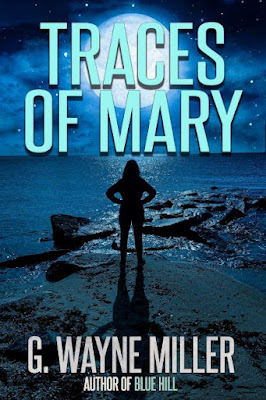
Traces of Mary: Read the reviews, order the book!


DESCRIPTION:

Despite carrying the scars of childhood trauma, Mary McAllister has enjoyed a successful career and become the mother of two wonderful children. Then their deadbeat father leaves, her young daughter dies, and she is hospitalized in a psychiatric center as she seeks to recover from this devastating loss. But she is not the same when she is released—and during escalating periods of crisis, she claims to be possessed by Z-DA, an evil creature from a distant galaxy that has come to earth in a war almost as old as the universe itself with Ordo, leader of a good species.

Is this real, or only extreme psychosis? Is Mary's young son, Billy, really Theus, the First Lieutenant for Ordo, as she increasingly believes? Is Billy's dead sister, Jessica, really reaching out to her brother for help in freeing her from the dark and distant place where she is trapped? As a city is engulfed in mayhem, events race toward a stunning conclusion in Traces of Mary, a one-of-a-kind mix of horror, science-fiction, thriller and mystery by best-selling author G. Wayne Miller.


ORDER "TRACES OF MARY" ON AMAZON

ORDER "TRACES OF MARY" ON BARNES & NOBLE


THE LATEST REVIEWS:

“ ‘Traces of Mary’ is a bold, bracing, blisteringly original hybrid tale that reads like Stephen King on steroids. G. Wayne Miller has penned a wild, psychedelic mind-bender of a book that challenges our sensibilities even as it hops across multiple genres with skill and aplomb. Call it horror, science fiction, mystery, thriller, or anything else you want, so long as you call it your next must-read.”
-- Jon Land, USA Today bestselling author.

“Strap yourself in for an intergalactic joy ride with Billy McAllister, the most engaging boy since Harry Potter, and a supporting cast starring his newly dead sister, Jess; his possessed mother, Mary; his uncle, Father John Lambert, a Jesuit priest; and a stuffed animal named Baby Bear. Throw in the evil Z-Da who is trying to kill Ordo, the leader of the Priscillas from a distant galaxy, Ordonia, and you’re in for a rare treat with ‘Traces of Mary.’ ”
-- Barbara Roberts, physician and author.

“This big-hearted novel follows an endearing 11-year-old boy who must navigate his mother's harsh reality of poverty, grief and mental illness. Along the way he discovers a place where resilience and faith are rewarded, where the miseries of the real world can be overpowered by the benevolence of a fantastical universe.”
-- Mark Johnson, Pulitzer Prize-winning journalist and author.

"Traces of Mary has everything you could ever want in a book. A seamless blend of science fiction and horror,  it’s chock-full of action and mystery and scenes that will make you turn up the lights and check the locks. Best of all, it’s got heart and compassion and living, breathing characters you’ll come to love. This novel is a treasure." 
-- Paul F. Olson, World Fantasy Award Nominated Author of Alexander’s Song and Whispered Echoes

“Supernatural horror? Check. Cosmic horror? Check. Science-fiction horror and childhood horror and psychological and religious and chemical horror? That's G. Wayne Miller's gripping Traces of Mary. Bonus: Billy, kid protagonist who is not a Harvard professor in kid skin. Bonus #2: Father Jack character, a Catholic priest who is neither a bumbler nor a perv. Flat-out, Traces of Mary is a five-star page-turner and a book to be remembered long after that last page.”
-- Mort Castle, Bram Stoker winner and best-selling horror author.

"Traces of Mary is genre-blending in all the best ways, taking twists from thrillers, creativity from sci-fi, darkness from horror and heart found in any great fiction. Do not miss another fantastic tale well told by G. Wayne Miller." 
--Vanessa Lillie, bestselling author of Little Voices and For the Best

“G. Wayne Miller’s latest book is a complex, cross-genre tale of mystery and horror. Traces of Mary draws the reader into a dark world, both painfully realistic and fantastical, and doesn’t let go.  Full of suspense and humor, it will keep you guessing until the very end.” 
-- Jan Brogan, author of “The Combat Zone: Murder, Race and Boston’s Struggle for Justice”; “A Confidential Source”; and the Hallie Ahern mystery series.

   “G. Wayne Miller has given the world a diversity of wonderful books, bestsellers that captivate, inform and otherwise transport his readers to new worlds. With Traces of Mary, Miller again dips his talented pen into the ink of imagination, giving readers a bold, immersive story that will captivate, thrill and thoroughly entrance.
   “With a cast of memorable characters enriching his detailed storyline, Miller anchors Traces of Mary with Mary McAllister, a mother of two who is plunged into a chaos that challenges her very core. Miller fills this story with people of dimension and believability, as he swiftly unfurls the action through scene development and snappy, concise dialogue. Each character quickly comes to vibrant life and each scene ties into the overall arc of this tale. Readers will appreciate the depth of untold backstory giving this novel a deliciously rich, environmental context. Miller’s gift for creating a cinematic flow is marvelously alive in Traces of Mary. Traces of Mary crackles with other-worldly suspense. A storytelling gem.”
-- John Busbee, founder and producer of The Culture Buzz, Iowa’s independent cultural voice, for KFMG 98.9 FM, Des Moines, Iowa. 

"The Legendary G. Wayne Miller has done it again! The mix of science fiction with psychological terror is the perfect match for this sublime story!" 
-- Mark Slade, author, podcaster and anthologist.

"G. Wayne Miller's prose is electric in this genre-bending, mind-boggling, and devilishly good horror novel."
-- Ksenia Murray, Author of “The Cave”

“Perhaps it is his history as a reporter, or his investigative non-fiction, but either way, G. Wayne Miller has a way of delivering a suspenseful crime story with believable reality and scope. He leaves it to the readers to decide if the looming conclusion is paranormal or a natural horror, but by the end of ‘Traces for Mary,’ you will be at the edge of your seat.”
 -- Chauncey Haworth, radio show host, podcaster and writer.


Sunday, January 16, 2022

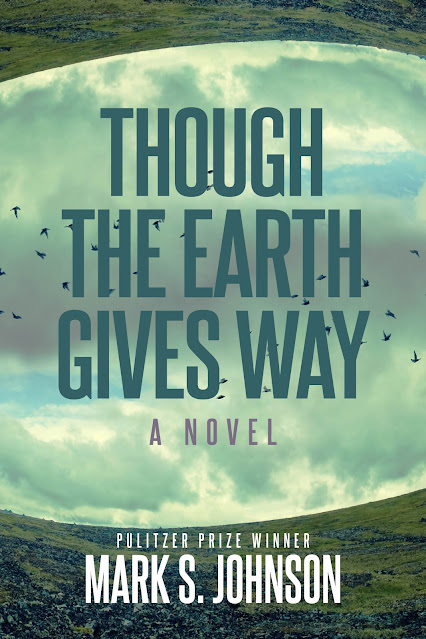
My review of Though the Earth Gives Way: 'A masterpiece'

“Though the Earth Gives Way,” by Mark S. Johnson. Bancroft Press, 288 pages. $25.

With his fiction debut, “Though the Earth Gives Way,” Mark S. Johnson has delivered a masterpiece. Beautifully written, with unforgettable settings and characters, this post-apocalyptic tale is a warning that disaster of unimaginable magnitude awaits us if we do not act urgently to mitigate the effects of manmade climate change.

That disaster in Johnson’s book?

A West Coast turned furnace, an East Coast flooded beyond repair, the region between the coasts a wasteland, literally. Technology gone, all of it — electricity, the internet, cellphones, motor vehicles, the entire infrastructure on which a nation and world was built — reduced to relics now. Survivors turned migrants walking on foot to they-know-not-where, some armed and dangerous, others victimized, all suffering physical and mental wounds as they cross a landscape littered with corpses of homo sapiens and other animals. Only the insects thrive here.


And yet, as grim as America has become in this not-too-distant future, “Though the Earth Gives Way” is also a story about friendship and family, the power of memory, the fear and allure of the future, and, yes, even the hope that might be found in a living hell.

More: USA Today names 'Though the Earth Gives Way' one of 20 winter books we can't wait to read

Johnson, formerly a Providence Journal staff writer, is a health and science reporter for The Milwaukee Journal Sentinel. He shared the 2011 Pulitzer Prize for Explanatory Reporting and has been a Pulitzer finalist three times. His science expertise shows in “Though the Earth Gives Way,” but it does not drive the narrative.

                                         Mark S. Johnson

Storytelling, at the level of Stephen King and Cormac McCarthy, other masters of dystopian fiction, does.

The narrator, Elon, left Rhode Island when the coast became uninhabitable. Foraging for food, his clothes fetid and his only belongings ferried in a shopping cart, he has limped to the woods of Michigan, where he stumbles on an old retreat center now occupied by an unnamed old man who takes him in, providing food and shelter. Soon they are joined by fellow wanderers: Clarie and Elissa, a lesbian couple; Asher, a rough-hewn Floridian, and Amira, the young woman who has traveled with him; Johannes, who escaped California but with the best intentions left his wife behind, a decision that now haunts him; Hunter, a tormented teenager; and Nizar, a Syrian who fled the horrors of his war-decimated native land for America.

Slowly, these nine gain a degree of trust, supporting each other and becoming a sort of family. Central to their growing bonds are the nightly stories that each tells around a fire, a timeless place for sharing. Imagine your own fireplace, firepit or campfire. Imagine the fires in cave times, where storytelling may well have been born.

Johnson’s command of voice in these separate stories is magnificent, with each character’s tale fitting what we learned of them before their tellings — and going beyond, deepening our understanding of each of them, and of humanity in general.

Nizar gives as good a description of storytelling as I have seen, saying: “We trade in stories, don’t we? That’s how we unlock intimacy in each other. The stories don’t have to be big or dramatic. Most of what happens in our lives is so ordinary. We leave so little trace that we were ever here. Stories help us forget how small we truly are. They are a way to leave a few footprints in the sand.”

The real-life takeaway of “Though the Earth Gives Way” is that scorched sand and submerged terra firma are the future awaiting us if our present course is not changed.

As Asher describes our world on the eve of ultimate crisis, “what we had wasn’t no monument to human beings. Guys sticking guns in your face for money. Pointless bar fights. Wars over the stupidest s---. And, yeah, someone figured out how to make a very small, very fancy phone. Yet when people told us — smart people — that we were destroying the planet, we did what? We argued. We couldn’t work together when our lives depended on it. Literally.”

That is America and the world today, not only in Johnson’s dystopian future.

Unlike his book, which ends when the old retreat center goes up in flames — caused by fire, ignited by unexpected means — there may still be time.

“I’ve been dreaming of mountains,” Elon says at the end.

Mountains, Johnson argues, that we must climb now if complete catastrophe is to be averted.

Staff Writer G. Wayne Miller is the author of 19 books. His 20th, "Traces of Mary," will be published in March.

This review was originally published in The Providence Journal on January 9, 2022.

Saturday, December 11, 2021

Nineteen years ago today. RIP, Dad.

  Author's Note: I wrote this nine years ago, on the occasion of the tenth anniversary of my father's death. Like his memory, it has withstood the test of time. I have slightly updated it for today, December 11, 2021, the 19th anniversary of his death. Read the original here.

  
Roger L. Miller as a boy, early 1920s.
My Dad and Airplanes
by G. Wayne Miller

I live near an airport. Depending on wind direction and other variables, planes sometimes pass directly over my house as they climb into the sky. If I’m outside, I always look up, marveling at the wonder of flight. I’ve witnessed many amazing developments -- the end of the Cold War, the advent of the digital world, for example -- but except perhaps for space travel, which of course is rooted at Kitty Hawk, none can compare.

I also always think of my father, Roger L. Miller, who died 18 years ago today.

Dad was a boy on May 20, 1927, when Charles Lindbergh took off in a single-engine plane from a field near New York City. Thirty-three-and-a-half hours later, he landed in Paris. That boy from a small Massachusetts town who became my father was astounded, like people all over the world. Lindbergh’s pioneering Atlantic crossing inspired him to get into aviation, and he wanted to do big things, maybe captain a plane or even head an airline. But the Great Depression, which forced him from college, diminished that dream. He drove a school bus to pay for trade school, where he became an airplane mechanic, which was his job as a wartime Navy enlisted man and during his entire civilian career. On this modest salary, he and my mother raised a family, sacrificing material things they surely desired.

My father was a smart and gentle man, not prone to harsh judgment, fond of a joke, a lover of newspapers and gardening and birds, chickadees especially. He was robust until a stroke in his 80s sent him to a nursing home, but I never heard him complain during those final, decrepit years. The last time I saw him conscious, he was reading his beloved Boston Globe, his old reading glasses uneven on his nose, from a hospital bed. The morning sun was shining through the window and for a moment, I held the unrealistic hope that he would make it through this latest distress. He died four days later, quietly, I am told. I was not there.

Like others who have lost loved ones, there are conversations I never had with my Dad that I probably should have. But near the end, we did say we loved each other, which was rare (he was, after all, a Yankee). I smoothed his brow and kissed him goodbye.

So on this 19th anniversary, I have no deep regrets. But I do have two impossible wishes.

My first is that Dad could have heard my eulogy, which I began writing that morning by his hospital bed. It spoke of quiet wisdom he imparted to his children, and of the respect and affection family and others held for him. In his modest way, he would have liked to hear it, I bet, for such praise was scarce when he was alive. But that is not how the story goes. We die and leave only memories, a strictly one-way experience. 

My second wish would be to tell Dad how his only son has fared in the last 18 years. I know he would have empathy for some bad times I went through and be proud that I made it. He would be happy that I found a woman I love, Yolanda, my wife now for four years and my best friend for more than a decade: someone, like him, who loves gardening and birds. He would be pleased that my three wonderful children, Rachel, Katy and Cal, are making their way in the world; and that he now has three great-granddaughters, Bella, Livvie and Viv, wonderful girls all. In his humble way, he would be honored to know how frequently I, my sister Mary Lynne and my children remember and miss him. He would be saddened to learn that my other sister, his younger daughter, Lynda, died in 2015. But that is not how the story goes, either. We send thoughts to the dead, but the experience is one-way. We treasure photographs, but they do not speak.

Lately, I have been poring through boxes of black-and-white prints handed down from Dad’s side of my family. I am lucky to have them, more so that they were taken in the pre-digital age -- for I can touch them, as the people captured in them surely themselves did so long ago. I can imagine what they might say, if in fact they could speak.

Some of the scenes are unfamiliar to me: sailboats on a bay, a stream in winter, a couple posing on a hill, the woman dressed in fur-trimmed coat. But I recognize the house, which my grandfather, for whom I am named, built with his farmer’s hands; the coal stove that still heated the kitchen when I visited as a child; the birdhouses and flower gardens, which my sweet grandmother lovingly tended. I recognize my father, my uncle and my aunts, just children then in the 1920s. I peer at Dad in these portraits (he seems always to be smiling!), and the resemblance to photos of me at that age is startling, though I suppose it should not be.

A plane will fly over my house today, I am certain. When it does, I will go outside and think of young Dad, amazed that someone had taken the controls of an airplane in America and stepped out in France. A boy with a smile, his life all ahead of him.

My dad, second from top, with two of his sisters and his brother.

Saturday, October 30, 2021

Happy Halloween! In the spirit of the day, I present "Death Train," one of the shorts in my collection "Vapors: The Essential G. Wayne Miller Fiction, Vol 2"


Death Train


From across the Iowa cornfields, sneaking through the early September night, Luke can hear it coming closer, closer, louder: The death train, starting to slow, easing up on the throttle, going to be a stop tonight.

Cat-like, he goes to his bedroom window, peers through the screen, the outside smells rich and sweet, harvest can't be but a week off.

He shivers and his upper body is getting a case of the chills again and at first he can't look.

Then he looks and...

...nothing.


'Course there's nothing. Can't see the death train, no sir. Death train don't run with lights. Don't have no switchmen with kerosene lanterns, don't have no friendly caboose rip-rollin' along, a big old pot belly stove burning.

Can hear it, though, sure you can, the clackety-clack of its wheels, the breathing heaving fire of its steam-engine belly, the laughter of its death engineer as he gets ready to pull down on the death whistle.

Matthew said:

(Listen to it, but don't listen to it for very long, Lukey my boy. Them that listens to it too long is as good as ---

(Don't say that word.

(Is goin' for a ride.)

``What is it, Luke?'' The voice is old and stern, the voice of Uncle John. Luke starts, like he's been caught touching himself  where he oughtn't to. He turns toward the light, a single 25-watt bulb hanging on a black cord from the hall ceiling. There he is now, Uncle John, his fat, doughy body filling the doorway to Luke's room. He's rubbing the sleep from his eyes. He's sweating. Always sweating, Uncle John.

``I asked you a question, boy, and I expect an answer. What is it?''

``Nothing,'' Luke says, thinking desperately there must be some way to explain everything without really explaining anything at all.

``Gotta be somethin', it bein' past 1 in the ayem and you kneelin' by your window, son, lookin' out over a cornfield that's as black as pitch. Gotta be somethin'. Nothin' don't look like this. Nothin's nothin. This is somethin'.''

``It was just, just a---''

``Train, Luke? You gonna say train?''

``A crow, uncle. Eating on the corn. Honest, I heard it.''

``Crows don't fly by night. You know better than that, son.''

``You leave him alone, you old fool. You hear me?''

Now Aunt Edna is up. He listens to the softness of her slippers gliding across the upstairs hall floor. He can hear the rustle of her silk nightgown, disturbing the end-of-summer heat that hangs heavy and wet and still, like the YMCA pool on a busy Saturday, up here on the second story.

``Stay out of it, Edna. Just stay out of it.''

Great big hissing, the death train, its death wheels turning slower, the sound of metal brake on metal axle like fingernails on a grammar-school chalkboard.

``What is it, Luke? A nightmare?'' Her voice is soothing, cool, like the autumn that doesn't seem to want to come this year. She never talks to John like that, only him. Only Luke, the child nature never let her have, the child her no-good sister left for her that day she packed her bags and left for California, goodbye and good riddance.

``No, Auntie. It's not a dream.''

``What is it then, Luke?''

``It's the...''

``What, Luke? What do you hear?''

Should he say the word? Should he?

Edna pushes past John. John grunts like a hungry old sow. On a Saturday night, after filling his body with bourbon and beer, he might have started in on her, his voice getting filthy and loud and his face turning redder than a freshly painted barn. Might have wished her stinking lousy soul to hell, and Luke's right along with it, the two of them be damned forever.

``Train,'' Luke says.

It's more than John can take. ``Now, you know there ain't no train within 50 miles of here, son. Never has been. Never been no old tracks, no new tracks, no way, no how. County road, and that's it. We been through all that before.''

Aunt Edna has his arm around him. She is gazing out with him over the corn, dark and mysterious and speaking in hushed tones under a sluggish breeze that barely has the strength to reach the farmhouse. Whole summer's been like that, hazy, humid, never-ending. Overhead, there is a rind of moon, and it shines ghostly through the cornfields, over the barn, past the oak grove and beyond to where---

I can hear the death train grinding to a halt.

Death whistle blowing, a low, shivering sound as might come echoing around and behind and through and off of the cracked marble stones in that graveyard out back of St. George's Episcopal Church. Out in that graveyard alone on a late November afternoon, it could be, Uncle John's corn crop long since in, the pumpkins going orange to brown, the air promising flurries, the daylight draining away into the trees, the shadows lengthening.

That kind of day, Matthew said, you might hear it.

Or on the sunniest most perfect day God ever did make -- then, then you might hear it, too.

Matthew said:

(Heard it myself there more than once, Lukey boy. In the churchyard.

(Heard what?

(Why, the death train, death whistle blowin' full away. And don't it make sense, boy, hearin' it there? Hearin it where it stops? Don't it now?

(I guess it does.

(Sure it does. Sure.)

Luke covers his ears. He starts to cry.

``You make him stop that now,'' John bellows to the woman who long since stopped sharing his bed, his room, his life. ``You get him back in that bed, Edna, so's we can have peace and quiet. A man can't even get a good night's sleep in his own house no more, all this horseshit goin' on. Been goin' on now two years, it has. I mean to put a stop to it.''

``You shut up, John. Just keep that trap of yours shut. Can't you see he's afraid?''

``Nine years old, and afraid of the dark. It's downright sinful, is what it is.''

``I told you, shut up.''

``Where's he get all this nonsense, that's what I'd like to know.''

``Go back to your room, John. I'll handle this. This is none of your concern.'' She's sounding angry now, Aunt Edna is, angry like the day she threw that young whippersnapper from the electric company right out of the front parlor.

``Goin' on like somebody fresh on the lam from the looney bin.''

``Put a lid on it, John.''

``Well, I'll tell you where he gets this,'' John goes on, the rage building in his voice. ``From Matthew Dorfman, that's where.''

``Matthew Dorfman's your best worker,'' Edna says. ``Anybody around here's talkin' nonsense, it's you, John Johnson.''

``Idiot, no-good, sonofabitch Matthew Dorfman. Sits on his brains, that one does. Tomorrow, gonna fire him. Don't need no farmhand gettin' this kid riled up like that. First light, gonna fire him. That'll put an end to this midnight crap with the kid here.''

``Matthew's my friend,'' Luke says, but John doesn't hear him.

Matthew said:

(They laugh at me, Lukey, all the time. Call me names. Your own uncle's 'bout the worst.

(Why, Matt?

(Folks are like that, I guess. Mean, some of 'em. Downright mean. You look a little different, talk a little slow, and they laugh at you. Human nature, I guess. The dark side of things.

(But I like you, Matt.

(I like you, too, Luke.

(And I don't think you look strange. Honest, I don't.

(You're a good boy, Lukey. Gonna be a fine man. I'll see to that. I'll see you make it.)

``It's okay, Luke,'' Edna says when John's gone back to his room.


Eleven stops the death train's made in Carson's Corners since Luke started hearing it two years ago, the same summer Uncle John brought a simple-minded out-of-towner named Matthew Dorfman onto the payroll. Eleven folks ticketed, boarded and taken away. Phyllis Smith, who died of a heart attack the evening of the day she had tea with Edna. Uncle John's schoolhood buddy George Snyder, who put the barrel of a shotgun into his mouth and pulled the trigger the third night of a three-day drinking binge. Mr. and Mrs. Gerard and their two children, killed instantly in a car crash a mile down Route 16, right there by the end of Uncle John's number-two cornfield. The three scouts from Troop 112, drowned when their canoe tipped over the afternoon of St. George's annual parish picnic. Old Mrs. Wannamaker, the Sunday morning Bible teacher, whose house burned down Christmas Eve.

Matthew said:

(Trains run on schedule, Luke.

('Course they do.

('Specially this one.

('Specially this.

('Course, it ain't no ordinary schedule. Comes and goes as it sees fit, if you get what I mean.

(I do.

(Ever wonder who makes up those funny schedules, Lukey, my boy?

(Never did. Who, Matt? Who makes them up?

(Folks that run 'em, that's who.

(But who runs them, Matt?

(Can't tell you that, my boy. Don't know myself. But it's gonna be someone pretty important, right? Train that big?

(Right.)

They stay by the window, sitting, staring out, Edna's arms around Luke.

Death train's stopped now. Baggage's being unloaded. Taking on water. What's that bang? Must be adding on a car. Must be that.

In his room, John closes his eyes and is almost asleep when he swears he hears it, from across the moonlit fields: a sound like a train whistle, then the uncomfortable grating of metal spinning on metal, and then, as the death train gets traction, builds momentum, a steady chug-a-lug-a-lugging.

He thinks of Luke, but only for a moment, because the aneurism that's been quietly blowing up inside his brain finally bursts, flooding his skull and drowning out the scream starting to form on his lips.


``On its way, ain't it, Luke?'' Edna whispers as the breeze suddenly freshens and the staleness begins to move out of the farmhouse.

He shakes his head, Luke does. ``Yes, Auntie. On its way.''

On his forehead the new wind is cool, comforting, reminding. Outside, the cornfields are dark, quiet, asleep.

 "Vapors: The Essential G. Wayne Miller Fiction, Vol 2"

Thursday, October 28, 2021

Traces of Mary, coming on March 8, 2022. from Crossroad Press. Pre-order now!


Dedication

To David Wilson and David Dodd, with heartfelt thanks for keeping my sci-fi, horror, mystery and fantasy torch burning brightly! And for all that both of you have done for so many other authors, too. 
  
Cast of characters 
In order of appearance

Tanya Audette, a young girl who lives in Boston. 

Sophie Audette, her mother.
 
Zachary Pearlman, Boston shop proprietor and owner of Fluffy, a French poodle. 

Billy McAllister, a young boy who lives in Providence, Rhode Island. 

Jessica McAllister, his older sister. 

Mary Lambert McAllister, their mother. 

The Rev. John Lambert, S.J., “Uncle Jack,” Mary’s brother, a Jesuit priest. 

Alice McKay Lambert, “Grammy,” Mary and Fr. Jack’s mother, of Blue Hill, Maine. 

George Linwood Lambert, “Grampa,” Alice’s late husband and father of Mary and Jack. 

Mr. Hawthorne, a mortician. 

Amanda Leroux, a social worker at the homeless center Fr. Jack runs in Boston. 

Stephen McAllister, Mary’s estranged husband and the father of her two children. 

Andre Washington, Billy’s best friend. 

Paul “Angel” Iannotti, 14, a school dropout and bully. 

Ordo, leader of the Priscillas, the good species in a distant galaxy.

Alex Borkowski, Billy’s and Andres’s second-best friend. 

Crimson Vanner, a drug addict and dealer. 

Z-DA, last of the Lepros, an evil species in a distant galaxy. 

Juan Sierra, a property owner in Providence, R.I. 

Rudolph Howe Sr. and Jr., lawyers in Providence, R.I. 

Mrs. Bartholomew, father of a boy burned in an amusement-park fire. 

Lt. Perry Callahan, a Providence police detective. 

Amanda Leroux’s mother, an elderly woman who lives on Massachusetts’ North Shore. 

Erica Han, a reporter with the Bangor Daily News. 


Chapter One: Heaven and earth.

Saturday, May 29, 2021


Billy McAllister’s sister is dead.

Billy knows that.

But time cannot steal the young boy’s memories. Time—four years, one month and 19 days of time—and still Jess appears in his dreams.

Sometimes in these dreams, she is calling to him.

She is someplace dark and cold, someplace distant and unreachable, no place he’s ever been or wants to go. He sees nothing but Jess’s face, illuminated softly by an unseen light. It’s a sad face, not the face he wants to remember—not the face in that photograph Mommy keeps on her bedroom bureau. Tears cover both cheeks. Her hair is tousled, her lips cracked and dry, her eyes wide and dark and empty, as if not really her eyes, but fake ones constructed of cheap glass.

She is clutching her favorite stuffed animal, Baby Bear, the Teddy bear that Santa brought.

Baby Bear looks sad, too.

“Help us, Billy!” Jess calls in these dreams. “Me and Baby Bear! Let us out of here! We don’t want to be dead! We want to be with you and Mommy and Uncle Jack!”

Billy reaches for his sister then—but always she’s too far, and the distance to her is increasing, and Jess is shrinking, is getting smaller and smaller, until finally she is gone.

But in other dreams, it is summer—the summer of 2015, when they took that photograph so dear to Mommy’s heart. The summer five years before the coronavirus pandemic, which devastated America and the world.

He was six that summer of 2015, Jess barely five. Her health had once again gotten better, and with every day, there was less talk of that “Pitts-bird” hospital, where she had spent so much time as the doctors fixed her one time and then, when she fell ill again, a second time.

Mommy was better, too. Mommy was not so upset all the time, wasn’t short-tempered and grouchy and crying and yelling and screaming at him when he hadn’t done anything at all.

Uncle Jack, who usually took Billy’s side, said that after all the bad stuff involving Jess’s health, the family deserved a good stretch—that it was always darkest before dawn, and now the sun was climbing high into the sky.

They spent June and July at Grammy’s. Her house, larger than any house Jess and Billy had ever been inside, was in Blue Hill Falls, Maine, that magical seaside place where the mountain really was blue, at least when viewed from a distance. It was major fun, those two months, ice cream and corn on the cob and lobster and fried clams and staying up until ten or even eleven o’clock, way past regular bedtime. The ocean, cold as it was until August, when you might be able to handle a few minutes’ swim without shivering, was the best.

Almost every day, they played on the little beach there at Blue Hills Falls, where Grammy’s house overlooked Mt. Desert Narrows.

It was go-easy play because they had to be very careful of Jess. They had to keep the saltwater from those big zig-zaggy scars across her tummy, evidence of where surgeons had transplanted one liver into her, and then a second when the first had failed. They had to keep sunblock all over her, and she had to wear a straw hat and her Elsa sunglasses.

Jess tired pretty easily, but she had spurts of energy, too, and during them, they climbed rocks and hunted for periwinkles and fiddler crabs and built sandcastles and went sailing with Mom and Uncle Jack on Grammy’s big boat.

“How big is the ocean?” Jess always liked to ask.

“Bigger than the biggest lake in the world,” Grammy would answer.

“Wow, that’s huge!” Billy would say.

“Almost as big as heaven,” said Uncle Jack, a Jesuit priest who liked to shed his Roman collar on his occasional visits to Maine.

“Heaven is where Grampa is,” Grammy would say.

“I want to meet him some day!” Jess would say.

“No you don’t,” her mother said on one occasion.

A dark memory had welled up within her and she said no more.

Grammy wagged her finger at Mary and quickly changed the subject, to the fairy-tale story of how her parents had met.

“My mother was a young girl living in Nova Scotia when one summer day, she and a friend drove to Burntcoat Head Park to see the amazing tides at the Bay of Fundy,” Grammy said. “Do you children know about those?”

“No!” Jess and Billy said.

“Highest tides in the world,” Grammy said. “One of the seven or eight or nine or ten Wonders of the World, I’ve lost count. People come from all over to see.”

“Wow,” Jess said. “Can we go there one day, Mom?”

“That would be nice,” Mary said.

“So there was my mother, Miss Alice O’Reilly,” Grammy continued, “when my father, George McKay of Blue Hill Falls, Maine, happened to be visiting there with friends. They’d taken the old steamer up from Bar Harbor to Halifax for a week-long holiday. And there was Miss Alice, watching the tide roll in with a rumble and a roar. Their eyes met, and both later said it was love at first sight. The rest, as they say, is history. They married, Alice and George moved in here, and along came I, their only child.”

“Cool,” Jess said.

“Neat,” said Billy.

The question of what happened after that did not arise.

Not that summer.

Rainy days, they stayed inside Grammy’s mansion and made mischief with her three cats and Tuggs the bulldog, a good-natured old hound that was Grammy’s favorite pet. Once, when it was cloudy and cool but the heavens hadn’t opened up, Jess and Billy snuck off to the family cemetery and mausoleum, which stood in a grove of pines on a bluff overlooking the ocean. Two hundred years of McKays and their spouses and other relatives were buried there—a few in the marble crypt erected by Grammy’s great-grandfather, Samuel McKay, who’d made his fortune in the clipper trade and then, in a move that shocked his Yankee friends and associates, converted to Catholicism after a Jesuit priest who was said to possess the power of healing had laid his hands on his abdomen and cured him of the colon cancer that had been consuming him.

The burial ground and mausoleum, where Jess herself would be laid to rest in less than a year, was strictly off-limits and the one time Mommy found them nosing around there, she went ape. That was the only time they were punished that summer, although they got off easy, only one day without TV and no dessert.

The attic was also strictly off-limits, but there was no chance of them of getting up there, much as curiosity compelled them: the door was padlocked and nailed shut.

“But why?” Jess asked one time

The response remained as vivid as yesterday to Billy.

Grammy, he remembered, said “attics are no good for anything but collecting dust,” and then she fought tears. Mommy convulsed, as if pain had pierced her body, and after screaming “do NOT ever ask again,” she went into the kitchen, where she poured a tall glass of hard liquor.

“Grammy’s right,” said Uncle Jack, who visited as often as his busy schedule would allow. “Attics do nothing but collect dust, and dust does no one any good. Now come into the library, my precious niece and nephew. I have a new book I’d like to read to you. One Morning in Maine is the title. It’s a classic I’m sure you will enjoy—more than the average bear!”

That was one of Uncle Jack’s favorite lines, an ode to his niece’s love of the Teddy variety.

In early August, as the Maine water was approaching swimming temperature, Uncle Jack drove up again from Boston. He stayed the weekend and on Monday morning, he took everyone back to Rhode Island so Mommy could apartment-hunt. The first place they visited was affordable, and near a school where Jess could start kindergarten and Billy, first grade.

So they took it. That night, they celebrated by visiting Ocean State Park, where they rode the merry-go-round and Ferris wheel, ate all the cotton candy they wanted, and had their picture taken in a booth.

By Labor Day 2015, Jess’s health was deteriorating again.

In April 2016, she would die.


Tuesday, October 26, 2021

            Forty years ago today, I started work at The Providence Journal.

I had arrived in town a young man with few material possessions and only three years’ experience at two other newspapers, The Cape Cod Times and before that, The Transcript in North Adams, Mass. (no journalism degree, nor even a course). What I did bring was a lot of excitement to be joining the staff of a place that justifiably had earned a reputation as a writers' paper.

An editor named Joel Rawson was behind that rich writing culture and he had the support of his superiors, all the way up to the late Michael Metcalf, publisher and member of the manufacturing family that had owned The Journal for decades. Founded in 1829, The Journal was then and remains now the oldest continuously published daily newspaper in America.

My first two stories, reprinted at the bottom here, were penned during an initiation week in the newsroom at 75 Fountain St., after which I was assigned to the Greenville bureau. I spent a few months there, worked a few shifts at the State House, and then was moved to the Newport bureau. In late 1983, Joel brought me downtown full-time, with responsibility for the state prison system, state child services, and the state behavioral healthcare and developmental/intellectual disabilities systems.

Within a year, I had written the first of my many series, ``Building New Lives,'' a six-part exploration of deinstitutionalization that ran from Nov. 25 through Nov. 30, 1984. And thus a journalistic passion – behavioral and mental health – was born.

Five years later, publication of "Children of Poverty," about a Black woman and her children, began another journalistic passion that also continues to today: in-depth reporting about social, economic and health disparities and historical injustices.   

 In the ensuing years, I had the honor of working with some of the nation’s finest journalists who later moved to other publications, among them Dan Barry, Michael Corkery, C.J. Chivers, Sheryl Stolberg, Farnaz Fassihi and Helene Cooper, now at The New York Times; Kevin Sullivan and Paul Duggan, with The Washington Post; Mark Johnson, the Milwaukee Journal Sentinel; Jennifer Levitz, The Wall Street Journal; Mark Arsenault, The Boston Globe; Drake Witham, Dallas Morning News; and Tony Lioce, Tom Mulligan and Irene Wielawski, The Los Angeles Times. Also, Jon Karp, who after leaving The Journal became an editor at Random House and is now the president and CEO of Simon & Schuster. Jon bought and edited my first four non-fiction books, and later, from the S&S corner office, bought a fifth.

Other esteemed colleagues from those years eventually wound up in academia, including Wayne Worcester, Ira Chinoy, Mike Stanton, Berkley Hudson, Bruce Butterfield and Tracy Breton. Others stayed the course, and that long list includes Brian Jones, M. Charles Bakst, Randy Richard, Bill Reynolds and many others now retired. Several, like me, are still on staff: Tom Mooney, Mike Delaney, Peter Donahue, Katie Mulvaney, Jack Perry, Mark Patinkin, Paul Parker, Kathy Gregg, Linda Borg, Kris Craig and Bob Breidenbach.

What a ride it has been for this son of an airplane mechanic and a mother who was the daughter of poor Irish immigrants.

The Journal gave me many of the tools I needed to develop as a reporter – and also as a filmmaker, podcaster and author of 20 published books, non-fiction and fiction. My 21st, "Traces of Mary," will be published by Crossroad Press in 2022.

The Journal allowed me to witness the paper winning the 1994 Pulitzer Prize for Investigative Reporting and to be part of the team that was a finalist for the 2004 Pulitzer Prize for Public Service, a recognition of our coverage of The Station nightclub fire that killed 100 and injured hundreds -- and the months of reporting and investigating that followed. Plus more paper and personal honors and prizes too numerous to list here. The Journal also gave me credibility for my community service efforts, notably as chairman (new emeritus) of the board of trustees of a public library.

And The Journal partnered with the Pell Center at Salve Regina University on the Story in the Public Square program, an initiative to celebrate, study and tell stories that matter. I am director of the program and co-host and co-producer, with Salve's Jim Ludes, of the Telly-winning show of the same name broadcast more than 500 times each week on public television stations coast-to-coast and heard five times each weekend on SiriusXM’s P.O.T.U.S. channel.

As I advanced in my career and had something to offer younger journalists -- and you know who you are! -- I mentored several of them (and still provide some guidance, when asked, even though most of these writers have moved to other stages). Yes, paying it forward.

 When I break it all down, it comes to this: how lucky I am to have been able to tell stories about people from all walks of life, hundreds of people from admirable to despicable I never would have met in any other profession. This is a small sampling:

Stephen King, my favorite author since the first book of his that I read, 'Salem's Lot.

Directors Joel Schumacher and Steven Spielberg. U.S. Senators including Ted Kennedy, Jack Reed, Sheldon Whitehouse and Claiborne Pell, subject of one of my books, “An Uncommon Man.” Joe Biden. Many governors, mayors and other politicians. A murderer, an arsonist, and a rapist.

Longtime Zambarano Hospital resident, artist and disability rights champion the late Frank Beazley, one of my favorite people.

Some of the engineers who maintainthe Newport Bridge.

Dr. Hardy Hendren, former Chief of Surgery at Boston Children’s Hospital. 

Plastic surgeon Patrick Sullivan.

Neil Corkery, who lives with Alzheimer's disease. 

Melissa Fundakowski, who lives with schizophrenia.

Dr.C. Walton Lillehei, the father of open-heart surgery.

Roush/Fenway NASCAR king Jack Roush and several of his drivers.

Native Americans Paula Dove Jennings and Tomaquag Museum head Lorén M. Spears, who among other stories narrated the story of the Great Swamp Massacre of 1675, the most violent episode on Rhode Island soil.

Hasbro chairmen and CEOs Alan Hassenfeld and Al Verrecchia, now prominent philanthropists. 

And many, many more, most of whom might be labeled “ordinary people” but who in truth were anything but. Some are listed at my bio here. 

 Let me close this little trip down Memory Lane with a video my then-teenage son shot of The Journal newsroom 13 years ago (CLICK to viewand thanks to editors who traveled with me, offering their time and energy not just to me and my colleagues, but also to an awesome newspaper tradition: among them, Joel Rawson, the late Chuck Hauser and Jim Wyman, Carol Young, Tom Heslin, Sue Areson, Karen Bordeleau, Alan Rosenberg, Mike McDermott and now, David Ng.


The late Jim Wyman, left, with Joel Rawson, Carol Young, Tom Heslin and Karen Bordeleau. I wrote Jim's obit and his widow placed that day's paper in his coffin for burial with him.


Wednesday, September 29, 2021

Wolf Hill: An essay from long ago.

 I periodically repost some of my favorite essays. Here's one, set in autumn, my favorite season. I wrote this in October 1997, on a break from finishing my fourth book, Toy Wars: The Epic Struggle Between G.I. Joe, Barbie and the Companies That Make Them. Cal is a young adult today, living in Japan. Rachel and Katy have children of their own. Life, like a river, keeps on flowing.


WOLF HILL

An Essay About a Boy


We avoid the woods in summer. We don't like bugs, the ticks and mosquitoes especially, and anyway, we're drawn to the beach at Wallum Lake, which is just up the road. But early October finds us eager for the first killing frost. It came this year at the customary time, when the sugar maples are at their peak and the oaks are only beginning to turn. The temperature at dawn read 29 or 30 degrees, depending on the angle the thermometer was viewed. I figured if any of my city friends asked, I'd say 29.

By late afternoon, it had warmed to almost 50. The sky was cloudless and the breeze had shifted to the south. I put on my boots and vest and helped Cal, who is almost three, on with his. Our vests have large pockets, very important for walks in the woods. We went through the backyard and onto the cart path that ascends Wolf Hill, a fanciful name in the nineties, even for a rural town like ours. Cal's first priority was equipping himself with a stick. He found one about two feet long, and another slightly larger, which he gave me. ``Little boys need big sticks,'' he observed. I wholeheartedly agreed.

Young Calvin with his proud dad.
Many years ago, when a farmhouse graced the top of Wolf Hill, the path could accommodate vehicles; one, a bus, ended its last journey up there and its rotting remains continue to be a source of wonderment to all who happen upon it. Every year the mountain laurel and pine claim more of the path, and this year was no exception, but there was still plenty of room -- more than sufficient, I informed Cal, for another good flying- saucer run this winter. Cal insisted on taking the lead and, unlike our last walk, in April, he refused assistance getting past deadfalls. He went under, or around, and then stopped to reveal the appropriate route to me. ``Dad, come on over here,'' he said at one point, ``that's a safe place to get by.''

We climbed, past the inevitable stone walls, still remarkably intact, if mostly overgrown. The air seemed fresher as we continued, the light through the foliage stronger, and soon enough we'd reached the peak. Only a cellar hole is left of the farmhouse, destroyed some thirty years ago in a fire of suspicious origin. Rusting machinery, barrels and bedframes are strewn about, and the woods are slowly claiming them, too. We marveled together at a sight as strange as grape vines entwined around a bedframe, and I tried explaining how a house not unlike our own had been reduced to ruin, but I don't believe I succeeded, nor did I really try. I steered Cal's attention to the only grass on Wolf Hill, a small, sunlit remnant of lawn. We picked wildflowers, the last of the season. I did not know the species. They had thirteen petals and came in two shades: lavendar and white. The frost had not touched them. Cal was more interested in mushrooms. He'd been keen on mushrooms since our last swim at Wallum Lake, when he found ones as big as my hand that had materialized overnight beneath a picnic bench. He also gathered acorns, which he proposed to feed to squirrels, a word he still had difficulty pronouncing.

From the cellar hole, we descended to the quarry. I cautioned Cal not to run, but he explained that he was not -- this was skipping. I wanted to carry him or at least hold his hand; instead, I took a breath and was silent on the matter. The quarry has not been worked since the 1800s, but if you look around town, you will see many foundations made of its imperfect granite. Our own front steps, I am sure, came from here. Water has long filled where men once labored, of course, and a century's worth of sediment covers the bottom, making it impossible to gauge true depth (although we have tried, with our sticks). When Cal is a little older, I will tell him -- as I did his sisters -- spooky stories of the goings-on here when the moon is full. For now, we concern ourselves with water. It had not rained in over a week, and the stream that empties the quarry was dry. Our April walk was during a nor'easter, and we got soaked playing in the waterfall, but it was gone now, too. Cal was worried it would never return, but I reassured him it would, with the next steady downpour.

The shadows were lengthening and the temperature was edging down. An inventory of our pockets disclosed sticks, pebbles, acorns, flowers, mushrooms and a bright yellow leaf, which Cal had selected for his mom. We left the quarry and made our way back to the cart path through a stand of towering Balsam firs, unlike any other on Wolf Hill. When the girls were small, long before Cal was born, we found this place. It resembles a den, and the forest floor is softly carpeted and often dotted with toadstools -- certainly a spot, I allowed, where elves dance under the starry sky. Honest? Rachel and Katy were wide-eyed. There was only one way to know for sure, I said: Some fine summer night, we would have to camp out here, being careful to stay awake until midnight. We never did. Rachel is in high school now, and Katy, four years younger, is sneaking looks at Seventeen. Cal listened with great interest at the prospect of seeing elves. He was tired, and as I carried him home, I promised we'd camp out next summer, bugs and all. I intend to ask Rachel and Katy if they'd care to join us.

Copyright © 1997 G. Wayne Miller

Monday, July 5, 2021

Selections from Book Number 20, to be published soon

At 5:45 p.m. on Monday, July 5, I finished my latest book, what will be my 20th in print when it is published in a few months. A thorough edit of this novel awaits, but typing THE END is always rewarding and worth a champagne toast. 

Herewith the beginning of the first chapter, the last sentences of the epilogue, and the cast of characters. Stay tuned for publication details…


Traces of Mary


Copyright 2021 by G. Wayne Miller


Chapter One.
Saturday, May 29, 2021 

Billy McAllister's sister is dead. 

He knows that.

But time cannot steal the young boy’s memories. Time -- four years, one month and 19 days of time -- and still Jess appears in his dreams. 

Sometimes, she is calling to him.

She is someplace dark and cold, someplace distant and unreachable, no place he's ever been or wants to go. He sees nothing but Jess's face, illuminated softly by an unseen light. It's a sad face, not the face he wants to remember -- not the face in that photograph Mommy keeps on her bedroom bureau. Tears cover both cheeks. Her hair is tousled, her lips cracked and dry, her eyes wide and dark and empty, as if not really her eyes, but fake ones constructed of cheap glass.

She is clutching her favorite stuffed animal, Lambie, the Teddy bear that Santa brought. 

Lambie looks sad, too.

``Help us, Billy!'' Jess calls in his dreams. ``Me and Lambie! Let us out of here! We don't want to be dead! We want to be with you and Mommy and Uncle Jack!''

Billy reaches for his sister then -- but always she's too far, and the distance to her is increasing, and Jess is shrinking, is getting smaller and smaller, until finally she is gone.

Other times, much happier times, it is summer -- the summer they took that photograph so dear to Mommy's heart. The summer long before the pandemic, when the world went mad.

He was six that summer, Jess barely five. Her sickness had finally gotten better, and with every day, there was less talk of that ``Pitts-bird'' hospital, where she spent so much time as the doctors tried to fix her. 

Mommy was better, too. Mommy was not so upset all the time, wasn't short-tempered and grouchy and crying and yelling and screaming at him when he hadn't done anything at all. 

Uncle Jack, who usually took Billy's side, said that after all the bad stuff involving Jess’s health, the family deserved a good stretch -- that it was always darkest before dawn, and now the sun was climbing into the sky.

They spent June and July at Grammy's. Her house – larger than any house Jess and Billy had ever been inside -- was in Blue Hill Falls, Maine, that magical seaside place where the mountain really was blue, at least from a distance. It was major fun, those two months, ice cream and corn on the cob and lobster and fried clams and staying up until ten or even eleven o'clock, way past regular bedtime. The ocean, cold as it was, at least until August, when you might be able to handle a few minutes’ swim without shivering, was the best. 

Almost every day, they played on the little beach there at Blue Hills Falls, where Grammy’s house looked out over Mt. Desert Narrows. 

It was go-easy play because they had to be very careful of Jess. They had to keep the saltwater from that great big zig-zaggy scar across her tummy, evidence of where surgeons had transplanted one liver into her, and then a second when the first had failed. They had to keep sunblock all over her, and she had to wear a straw hat and her Elsa sunglasses. 

Jess tired pretty easily, but she had spurts of energy, too, and during them, they climbed rocks and hunted for periwinkles and fiddler crabs and built sandcastles and went sailing with Mom and Uncle Jack on Grammy’s big boat.

“How big is the ocean?” Jess always liked to ask.

“Bigger than the biggest lake in the world,” Grammy would answer.

“Wow, that’s huge!” Billy would say.

“Almost as big as heaven,” said Uncle Jack, a Jesuit priest who liked to shed his Roman collar on his occasional visits to Maine.

“Heaven is where Grampa is,” Grammy would say.

“I want to meet him some day!” Jess would say.

“No you don’t,” her mother said on one occasion.

A dark memory had welled up within her and she said no more. 

Grammy wagged her finger at Mary, and quickly changed the subject, to the fairy-tale story of how her parents had met.

“My mother was a young girl living in Nova Scotia when one summer day, she and a friend drove to Burntcoat Head Park to see the amazing tides at the Bay of Fundy,” Grammy said. “Do you children know about those?”

“No!” Jess and Billy said.

“Highest tides in the world,” Grammy said. “One of the seven or eight or nine or ten Wonders of the World, I’ve lost count. People come from all over to see.”

“Wow,” Jess said. “Can we go there one day, Mom?”

“That would be nice,” Mary said.

“So there was my mother, Miss Alice O’Reilly, when my father, George McKay – your maternal grandmother – of Blue Hill Falls, Maine, happened to be there visiting with friends. They’d taken the old steamer up from Bar Harbor to Halifax for a week-long holiday. And there was Miss Alice, watching the tide roll in with a rumble and a roar. Their eyes met, and both later said it was love at first sight. The rest, as they say, is history. They married, Alice and George moved in here, and along came I, their only child.”

“Cool,” Jess said.

“Neat,” said Billy.

The question of what happened after that did not arise.

Not that summer.


EPILOGUE
Sunday, October 3
Freeport, Nova Scotia

A half hour later, a Honda Civic with Maine license plates pulled into the driveway. Mary was expecting a new guest, so she went out to greet the driver.

“Hannah Rosenthal?” Mary said.

“No, Erica Han,” the driver said, stepping out. “I’m a reporter with the Bangor, Maine, Daily News. You must be Mary McAllister.”

Mary concealed her surprise.

“No, I’m Mary Waletzky,” she said. “Helper-in-chief of the Prana Center.”

Han showed her a copy of the August 3 Daily News. Mary McAllister’s photograph was on the front page, illustrating Han’s story.

“An unspeakable tragedy,” Mary said. “But you are not the first person to mistake me for her. The resemblance is striking. Spooky, really. I hope is there is closure some day for everyone affected by the deaths or her and her son. I can only imagine the pain.”

“Are you sure you’re not Mary McAllister?” Han said.

“As sure as my Nova Scotia license confirms I’m Mary Waletzky,” Mary said. “Wait a minute and I’ll get it for you. Would you like to see my passport, too?”

“That won’t be necessary,” Han said.

Mary went into her office and returned with her license. 

The reporter scrutinized it.

She was satisfied.

“I have to confess that I’ve been mistaken for someone else, too,” Han said. “The actor Constance Wu.”

“She was in Crazy Rich Asians!” Mary said. “Loved that movie. There’s definitely an uncanny resemblance. In fact, when you pulled up, I thought you were Constance Wu!”

The women laughed.

“I’ll be on my way now,” Han said. “I’m sorry to have disturbed you.” 

“No worries,” Mary said. “Before you go, may I ask you something?”

“Sure,” Han said.

“Why did you drive so far to a place with no connection to May McAllister and her son?”

“You’ll think I’m insane when I tell you,” Han said, “but the address came to me in a dream.”

“I don’t think you’re insane,” Mary said.

“May I ask a favor?” Han said.

“Of course.”

“Please don’t tell anyone I was here.”

“My lips are sealed.”

“Again, I’m sorry for the disturbance. This looks like a lovely and peaceful place.”

“It is.”

“Take good care,” the reporter said.

“You, too,” Mary said as Han drove off.

THE END

Cast of characters


In order of appearance


Tanya Audette, a young girl who lives in Boston.

Sophie Audette, her mother.

Zachary Pearlman, Boston shop proprietor and owner of Fluffy, a French poodle.

Billy McAllister, a young boy who lives in Providence, Rhode Island.

Jessica McAllister, his older sister.

Mary Lambert McAllister, their mother.

The Rev. John Lambert S.J., “Uncle Jack,” Mary’s brother.

Alice McKay Lambert, “Grammy,” Mary and Fr. Jack’s mother, of Blue Hill, Maine.

George Linwood Lambert, “Grampa,” Alice’s late husband and father of Mary and Jack.

Mr. Hawthorne, a mortician.

Amanda Leroux, a social worker at the homeless center Fr. Jack runs in Boston.

Stephen McAllister, Mary’s estranged husband and the father of her children.

Geoff Washington, Billy’s best friend.

Paul “Angel” Iannotti, 14, a school dropout and bully.

Ordo, leader of the Priscillas, the good species in a distant galaxy.

Alex Borkowski, Billy's and Geoff’s second-best friend.

Crimson Vanner, a drug addict and dealer.

Z-DA, last of the Lepros, an evil species in a distant galaxy.

Juan Sierra, a property owner in Providence, R.I.

Rudolph Howe Sr. and Jr., lawyers in Providence, R.I.

Mrs. Bartholomew, father of a boy burned in an amusement-park fire.

Lt. Perry Callahan, a Providence the police detective.

Amanda Leroux’s mother, an elderly woman who lives on Massachusetts’ North Shore.

Erica Han, a reporter with the Bangor Daily News.

Charlie Moonlight, a Native American spiritual leader.