Friday, April 26, 2013

#eWave: The Digital Revolution, @projo series


The entire ongoing series is now in one place on The Providence Journal site: the place for the stories, polls, graphics, video, stills and The Journal's eModule, a new way of storytelling for the digital age. I will be updating this page as the series unfolds throughout the year, with links to stories and more. Or you can visit the eWave series site.

Here's a breakdown, week-by-week. Don't forget to follow our Tweets -- #eWave Also, visit our eWave Facebook page. And we are now also on Tumblr.

 -- Part One, Sunday, April 26:
Complete with interactive graphics, an innovative timeline, a reader poll, video, still photos and more, The Providence Journal on Sunday, April 28, began a continuing series about the impact of technology on people where they live, work and play. The first installment of #eWave: The Digital Revolution is available online.

Dawn Glasberg and her family, Part One of #eWave: The Digital Revolution.
Journal Photo/Steve Szydlowski

And our #eWave Facebook page is now live. We invite you to Like it and join the discussion. And please Tweet, using our hashtag, #eWave

Along with the main story, the first-day package includes:
-- Five reader surveys about your own digital use, spending and habits that you can take, embedded in the main story.
-- An interactive graphical snapshot of everyday people's tech use in years from 1984 to today, by my colleague Paul Parker, Mr. Data himself.
-- A very cool timeline of tech milestones, large and small, from the first computer, the ENIAC, in 1946, to April 2013, when smartphones and surveillance cameras helped identify two suspects in the Boston Marathon bombing.
-- A fine video by my colleague Steve Szydlowski of a day in the life of Burrillville residents Dawn Glasberg and her family, whose story will be told in the main article to be published on Sunday.
-- A sidebar about Dawn's personal tech evolution, which began with a high school computer class in her 1992 - 93 senior year at Burrillville High School and continued with the early days of AOL. 
-- projo social media director Pam Cotter's advice on keeping kids safe in the digital era.
-- Colleague Kate Bramson's story about a new app started by some Providence entrepreneurs.
-- An editor's note on why we decided to devote so many precious resources to this topic.
>>>><<<<
-- Part Two, Sunday, May 5:
The data dig: Researchers mine mother lode of tweets, posts for clues about what makes us tick


Looking at ourselves...
Journal Photo/Steve Szydlowski
The second-day package includes:
-- Several polls, embedded throughout the main story.
-- First responses to the #eWave series.
-- R.I.-area tech meet-ups.
>>>><<<<
-- Part Three, Sunday, May 12.
Safety vs. privacy: New technology a boon to law enforcement, potential threat to civil liberties.
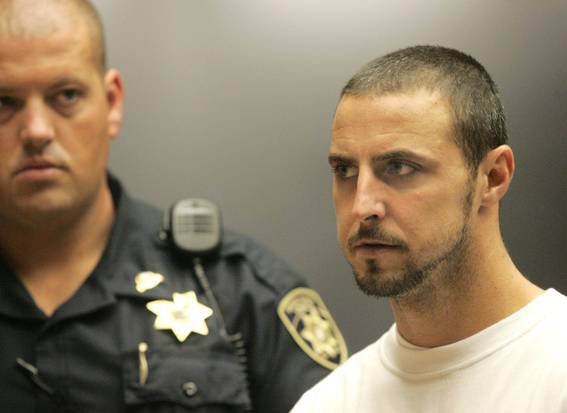
Jason Wayne Pleau at his arraignment for the 2010 murder of David Main during a holdup at a Woonsocket, R.I., bank. Pleau's lawyers asked that his statements to police after his arrest in New York City be thrown out because authorities had zeroed in on his location by tracking his cell-phone’s “pings” off cell sites without a warrant. Journal Photo/Mary Murphy
The third-day package includes:
-- More polls throughout the main story.
-- A precursor to our #eModule, a new way to tell stories. Full eModule coming May 26.
                                                     >>>><<<<
  Part Four, Sunday May 19.
 -- Providence Chamber of Commerce's tech-savvy Garage.
>>>><<<<
Part Five, Sunday May 26.
-- Your Brain on Digital: Rewiring the modern brain

Tom Murphy and Sandor Bodo/Providence Journal
 -- eModule, a new way to tell a story. Stay a minute, an hour, or more... up to you.
-- Brown professor Dima Amso on young brains, older brains.
-- Wheaton College professor Rolf Nelson on the virtues of video-gaming.
 >>>><<<<

Part Six, Sunday, June 2.
-- An online badge of success. The digital badge movement.
-- Another eModule: digital badges.
 >>>><<<<
-- How one family with members from Denver to Dubai stay in touch.
-- Photo gallery of this family, whose matriarch is in Providence.
-- Balancing social media, and in-person relationships.
-- Pam Cotter with some more great advice.


  >>>><<<<

Let me thank my many colleagues at the paper who joined together in true collaboration to conceive this series and bring its debut to fruition -- print, visuals, social-media, online, design, tech people and more, from front-line reporters to editors at the top. Folks, this is journalism in the digital age.

Technology, of course, has profoundly transformed media and the newspaper industry. Below is a montage of how The Journal and long-gone Evening Bulletin were delivered in decades past. I love the biplane, vintage Charles Lindbergh, but have to wonder if it was a Journal promotional stunt...

The way the paper used to be delivered. Photo of montage that hangs on Journal cafeteria wall.


Thursday, April 25, 2013

A Nearly Perfect Summer


 Thirteen years ago, The Providence Journal published my tenth major newspaper series, A Nearly Perfect Summer: Travels Through Old-Money Newport, about the time I spent immersed in Newport Society. The six-part series, which ran from July 2 - July 7, 2000, was the basis for my 2010 documentary movie, Behind The Hedgerow.

The late (and last) grand dame Eileen Slocum, central character in A Nearly Perfect Summer, the series, and Behind The Hedgerow, the documentary movie.
In our fickle world of technology, the series has disappeared from Journal servers (though it remains internally in our archives). So I was pleased to find a copy of Chapter Three, the whimsical 'Midsummer Nights,' on The National Museum of American Illustration site, virtual home of the museum that is owned and operated by my Bellevue Avenue friends Judy and Laurence Cutler.

So take a look at 'Midsummer Nights,' Chapter Three, in its original form.

Because he is retiring as Journal executive editor this week -- his last appearance in the newsroom is this afternoon, in fact -- I must mention my friend, colleague and mentor Tom Heslin. Tom edited the series, helping transform it with his exquisite touch into one of my most popular works ever. Thanks, Tom, and best of luck!

Tom Heslin, as we remember him from his three decades in the Projo newsroom


Saturday, April 13, 2013

1st Story in Public Square Conference a Success!


Jim Ludes, me, Dana Priest, and Sr. Jane Gerety, president of Salve Regina University.
 More than 150 people braved a wet and windy spring Friday in Newport, R.I., to attend the launch of the Story in the Public Square program, a year-round initiative of Salve Regina University's Pell Center and The Providence Journal that will feature more events in months and years to come and an active ongoing online resource and presence, www.publicstory.org After more than a year of planning, Story co-director Jim Ludes and I agreed our launch was a success.

Dan Priest. Journal publisher and CEO Howard Sutton, and Gary Hart. Journal reporter Paul Grimaldi, who covered the event, is in background.


The conference featured the inaugural award of the Pell Center Prize for Story in the Public Square to The Washington Post's Dana Priest, above, two-time Pulitzer Prize winner. Former Colorado senator Gary Hart, below, delivered the keynote address in Salve's Bazarsky Hall.

Gary Hart. "We need stories to tell us where we are [and] where we are headed," he said.

In the morning panel, print and broadcast storytellers, a community leader, and a best-selling novelist discussed ethical storytelling -- and told some compelling stories of their own.

L to R: Moderator Karen Bordeleau, executive editor of The Providence Journal; novelist Karen Thompson Walker; BU professor Chris Daly; URI political scientist Shanna Pearson-Merkowitz; WBUR's David Boeri; and the NAACP's Jim Vincent.

The afternoon session included a screening of The Providence Journal's award-winning documentary, "Coming Home," and a discussion moderated by Salve professor Donna Harrington-Lueker with panelists Iraq war veteran John DiRaimo, a central figure in the film;  the Rhode Island National Guard's Lt. Col. Richard Duffy; Journal columnist and film narrator Bob Kerr, a Vietnam veteran; Elizabeth Roberts, lieutenant governor of Rhode Island; and me.

We also honored the winners of our first annual student storytelling contest. First place wen to Sophie Zander, a junior at Ursinus College in suburban Philadelphia. Honorable mentions went to Ron Farina, a student at Central Connecticut State University, and Madelin Schlenz, a student at Community College of Rhode Island.

The conference was blogged and with the hash tag #SIPS13, got a lot of Twitter traction.


We urge Friday's participants to take a brief survey. 


And we hope to see everyone at our fall event, topic TBD, and our 2014 spring conference. Please send any suggestions on topic, speakers, panelists, potential award winners and anything else to my email.

Thursday, April 11, 2013

Three-camera setup for Story in the Public Square

Salve Regina University is pulling out all the stops to ensure great coverage of the Friday, April 12, launch of the year-round Story in the Public Square program, a partnership of Salve's Pell Center for International Relations and Public Policy and The Providence Journal, with major grant support from the Rhode Island Council for the Humanities.

Pell Center  head Jim Ludes checking the stage at Bazarsky Hall on Wednesday.

 The day-long program will include a keynote address by Gary Hart, an award to Washington Post staff writer and two-time Pulitzer winner Dana Priest, two panels, and announcement of winners of the student story contest. Setup began on Wednesday...

Salve Regina's Jamie McGuire, teacher and filmmaker, video production chief, on Thursday.

Footage from the conference will see a variety of uses, including a PBS broadcast and more. Jamie McGuire is using a three-camera setup, in Bazarsky Hall; another setup will be used in beautiful Ochre Court for interviews of key participants. We also expect good media coverage and lost of Tweeting -- hash tag for the event is #SIPS13 As in Story in the Public Square 2013, first of a series of annual spring conferences. Other events are planned throughout the year, and we have already established a vigorous online presence, please visit www.publicstory.org

Two of the three cameras under Jamie's control.


Checking the equipment late Thursday afternoon.


Tuesday, April 9, 2013

Novel 'Asylum' published: in memory of Frank Beazley, and to benefit Zambarano Hospital


Crossroad Press has just published Asylum, the second book in my Thunder Rise trilogy (stay tuned for book 3, Summer Place). Asylum is available as an Amazon exclusive on Kindle. Proceeds will benefit patients at state Zambarano Hospital, in Pascoag, R.I., home of the late Frank Beazley, inspirational artist, poet, champion of the disabled and my dear friend (proceeds will go to Patients for Progress, the fund Frank started). The story of Frank, in my 12-part 2006 Providence Journal series, is my favorite of the many narratives I have written. Frank died in 2012.

I hope Asylum will appeal to readers of horror and mystery -- who may already have been drawn into the vortex of the mountain I call Thunder Rise, in the Berkshires of Massachusetts. The trilogy stories begin in my first novel, Thunder Rise, first published in 1989 and recently re-released in digital format, and soon also to be an audio book.

Here is the blurb for Asylum on Amazon:

With the support of his wife, Sharon, young neurosurgeon Nick Emin has left medicine to pursue his longtime dream of architecture -- and now he has just won his first big contract, to design a luxury resort from the remains of an old state psychiatric hospital that lies in the shadow of Thunder Rise. It seems his decision to quit operating was wise, after all, despite the criticism he endured when he put down the scalpel.

Taking up temporary residence near the long-closed Elmwood State Hospital, Nick is slowly drawn into the institution -- and back in time, to when Nazi-inspired experimental surgery on the mentally ill was conducted behind the old brick walls of Elmwood. And not just lobotomy, once so widely practiced in America...

The pull of Nick into Elmwood’s past is no random development or horror-novel cliché. With his neurosurgical expertise, Nick has been called for a specific reason, by a specific person he will come to know well -- someone of great importance to him. When Sharon becomes pregnant with their first child, Nick begins to understand.

But first, the enigmatic Saint Peter and his friends have a mission for Nick that pits him against Elmwood’s inhumane administration -- a mission of salvation with terrible consequences if it fails.


>>>><<<<

Asylum is fictional, but its essential elements are real: the long, tragic history of institutionalizing the mentally challenged and disabled, and others society deemed as "unfit." This history spans America (and many foreign nations), and Rhode Island, where I live, has its own shameful past. Some of my earliest stories for The Providence Journal were about abuses at the Ladd Center and Institute of Mental Health. In part because of the public-service writing of The Journal, both institutions are now closed. I invite you to read more about the impact of public story on public policy.

And take a moment to read the essay with which I introduce Asylum:

A note to readers

This is entirely a work of fiction. I created the characters and events.


But I did not create the historical circumstances in which Asylum is set.


Not so very long ago –– within my memory as a journalist who covered their dying days –– American institutions for the mentally ill and disabled were as depicted in these pages: warehouses that often became laboratories for the mistreatment of our fellow human beings. Residents suffered needlessly, and endlessly. Time dragged. The real world faded until it was gone. Hydrotherapy, insulin, electro-shock treatments, lobotomy, forced sterilization, all of which are mentioned in this book -- all were real. All were commonplace. Untold numbers of lives ended beneath unnamed concrete markers in potter’s fields.


Since the 1980s, when I began covering these issues for The Providence Journal, many of these institutions have closed. I would like to be able to report that our society’s treatment of the people who once filled them has become more enlightened. And while there are some communities where this is indeed the case, and while I know of one institution where care is compassionate and first-class –– Zambarano Hospital, in Pascoag, R.I., where Frank Beazley, to whom this book is dedicated, lived for so long –– overall, little has changed. Many of the mentally ill and disabled are now imprisoned –– one institution having replaced another. Many are on the streets, lost, abandoned, and often abused. Some are war veterans, which adds an additional layer of national shame.


And all remain subject to ugly stigma that pervades our society. Stigma that is based on the absurd notion that disorders of the brain are somehow different than disorders of any other organ. 


Are we so lacking in compassion?


Have we learned nothing?

Friday, March 22, 2013

Creativity and spirituality

Elizabeth Gilbert, author of Eat, Pray, Love and other acclaimed works, speaks about the relationship of creativity and spirituality in the current issue of Spirituality & Health magazine. Highly recommended.

I found this passage particularly enlightening:

"I think creativity is entirely a spiritual practice. It has defined my entire life to think of it that way. When I hear the way some people speak about their work, people who are in creative fields who either attack themselves, or attack their work, or treat it as a burden rather than a blessing, or treat it as something that needs to be fought and defeated and beaten. . . . There is a war that people go to with their creative path that is very unfamiliar to me. To me, it feels like a holy calling and one that I am grateful for."

Read the full interview. 

Elizabeth Gilbert, courtesy Spirituality & Health.

Wednesday, March 20, 2013

Gina, Carlos, Don and Gil


Carlos Ferreira and Gina Russo, Station site, 4 p.m., March 15, 2013.


I met Brazilian journalist Carlos Ferreira at the Providence train station, where he had arrived on Amtrak Regional 172 from New York. We stopped at the newsroom of The Providence Journal, where he met editors Karen Bordeleau and Sue Areson, and reporters Tom Mooney and Tracy Breton. Like me, they have long been involved in coverage of the Station nightclub fire.

Carlos, from the newspaper Zero Hora, published in Porto Alegre, a city of almost 2 million, is among the many journalists who have been covering the January tragedy at Santa Maria nightclub club Kiss, where 242 died in a fire eerily like the Station. He was here in America to write stories about our people touched by our fire. He had reached out to me after I wrote an op-ed piece for his Brazilian newspaper group, where I had connected with editor Deni Zolin of Diário de Santa Maria.

 I had arranged for him to meet Gina Russo at the West Warwick club site. She got there about the same time that we did on Friday afternoon. It was cold, but sunny.

Gina, one of the truly great people of Rhode Island -- we are so lucky to have her -- talked with Carlos about her experiences and the experiences of the families and friends of what she calls these “one hundred angels,” whose memory she has vowed to keep alive even as she continues to help survivors heal. She gave him an autographed copy of her book. At one point, I thought I saw a shadowy figure in the woods behind the crosses. Next look, the figure was gone. I exchanged a puzzled look with Gina. She seemed to suggest that the unexplained was not uncommon here, on this sacred ground.

And then the figure reappeared: a bespectacled middle-age man with a backpack and an old camera. When he stopped near the shrine to Derek Johnson, whose father, Bob, I have written about, I went over and asked if he was a friend of Derek. No, he said, but he had met “Mr. J.” during the tenth-anniversary week and become a friend of Derek’s dad. 

His name was Don Haddock, from near Boulder, Colorado. Shoots only in black-and-white, only with real film, and only on his ancient Ricoh camera. Not a professional photographer, though passionate about his work, which is quite good, as I found visiting his website. He told me that when he is inspired by an event, he will sometimes hop on a plane and go shoot it -- the 2010 BP oil spill, for example. When he heard about the tenth anniversary of the Station fire, he decided to come. And when he got home after being here February 20, he didn’t have all the shots he wanted. So he got back on a plane, and here he was.

When I introduced myself, his eyes grew wide. Well, maybe not literally, but hearing my name took him back. A few years ago, he said, he had found a short video whose images and sound -- the sound of wind chimes on a cold winter day -- had moved him deeply. He had the video on his iPhone. Said he watched it frequently, both haunted and soothed by the music and scenes. Said it was one of the reasons he was so strongly compelled to fly in from Colorado, to pay personal witness to this place with 100 crosses.

It was a video I shot on the sixth anniversary of the fire. It has not been posted on The Journal web site for some time. I don’t even have a copy.

Don thanked me profusely for creating it. I didn’t know what to say. Four years, 2,000 miles, Brazilian visitor Carlos, survivor Gina, a Friday afternoon in March, a stranger who hopped on a plane -- could this be only coincidence? I have felt many powerful emotions in my many visits to the site: among them, sadness, anger, admiration for people like Gina. This was a different kind of power, something at once remarkable and strange.

So I introduced Don to Carlos and Gina. Four of us, from such different worlds, literally and figuratively, brought together for one moment.

And as we four stood there talking, cars began to pull in. One had two men who knew no one directly involved in the fire, but who had always wanted to visit, and this was the day they chose. Another car had two women I did not speak with; another, a man with a boy. And still another, with New Hampshire plates, was driven by Gil Talbot, a professional photographer. He was here to shoot the University of New Hampshire hockey team, which was playing in Providence that evening. He, too, knew no one from the fire, but had wanted to visit the site since reading John Barylick’s book, Killer Show.

So I introduced him to Gina -- and to Carlos and Don.

An hour or so had passed. The sun was weakening; it was time for new friends to part. I suppose it was like that many nights when music played and people talked and laughed and swapped stories at The Station... many nights, that is, until the last.

Gina and Gil left. Carlos wanted to see some more of West Warwick, as did Don, who had gotten to the site by bus, so I drove them around the town, past abandoned mills. Then we drove to Warwick, where I dropped Carlos at his hotel and Don at the airport. 

I headed home, pondering the meaning of chance.


Tuesday, March 19, 2013

A visit with Hardy, Eleanor and Charlotte Hendren

Hardy Hendren, at home.

Had a fine visit last Saturday to the Duxbury, Mass., home of longtime friends Hardy and Eleanor Hendren, and their granddaughter Charlotte, a student at Dartmouth, her grandfather's alma mater. And I mean longtime friends -- we were reminiscing about our first meeting, almost 25 years ago, as I began work on my first non-fiction book, The Work of Human Hands, about master surgeon and pioneer Hardy, who is now 87 and emeritus Chief of Surgery at Boston Children's Hospital. Wow, almost a quarter of a century.

The dining room set for dinner, fire burning, ancestor Jeremiah Hendren overseeing...

As usual, Eleanor served a great dinner, including rice, cauliflower, candied pineapple and a perfectly roasted lamb. Sweets and good strong coffee for dessert.

Eleanor checking the lamb, coat over head to reduce glare off oven gauges.

When it was time to eat, Hardy carved -- making his customary remarks about how to carve meat -- "like a skin graft," he said, as if we all had experience. As in surgery, a sharp knife and a steady hand are key. Put a set of Loupes on him, and you can imagine him in the OR.

Josh watches Hardy carve.

We had a tour of the basement, where the offices of the W. Hardy Hendren Educational Foundation for Pediatric Surgery and Urology are located. The Foundation has a Facebook page, in addition to a website. Eventually, all of Hardy's vast body of work will be available there. Hardy told many stories as he brought us around -- and we shared many laughs (sorry, inside jokes!).

Hardy with Katy in foundation office. Note the before- and after- photos of conjoined twins (right of clock), two of several he separated over his long surgical career.

We spent a lot of time in the kitchen. Eleanor and Hardy for the first time saw The Work of Human Hands on a Kindle reader. They were also interested in the audio version from Audible/Amazon, which has recently come out.

Kindle in the kitchen, with Eleanor and Hardy!

Hardy launched my non-fiction book career, and I remain deeply grateful to him. I did not expect for him and Eleanor to become such good friends, or Hardy to become godfather of my son, Calvin, but  developments like that keep life's journey one great unfolding story...

Hardy and me, almost 25 years in...

Soon, the sun was setting on beautiful Duxbury Bay. I stepped out to take fresh air from the Hendrens' yard, peaceful as always... 'til next time, dear friends!

Hendrens' yard, 6:35 p.m., March 16, 2013.


Monday, March 11, 2013

Recommended book on racism's impact on whites

   The impact of racism on African-Americans is an issue that has been publicly examined for some time now –– but the impact of that same racism on whites has rarely been explored, and never, to my knowledge, at book length. Now comes COMBINED DESTINIES: Whites Sharing Grief About Racism.
“By beginning a conversation that encourages self-examination and compassion,” writes publisher Potomac Books, “Combined Destinies invites its readers to look at how white Americans have been hurt by the very ideology that their ancestors created.”
Edited by psychotherapists Ann Todd Jealous, an African-American, and Caroline T. Haskell, who is white, the book is built on the personal stories of a diverse group of contributors. The issues of guilt, silence, shame, resistance and freedom, among others, are broken into chapters. The stories are compelling, intimate and persuasive.
Among them is one of the landmark civil rights cases, the 1960 court-ordered integration of New Orleans public schools. Two elementary schools were selected to be the first mixed-race schools. White parents angrily boycotted the schools, and blacks were afraid to send their children. On the first day of integration, only one black girl, Ruby Bridges, attended. Only two white children, escorted by police past shouting mobs, joined Ruby at the Wiilliam J. Frantz Schoo.
My fiancé Yolanda was one of those two white girls, and in an interview in Combined Destinies, she explains its impact on her –– and the courageous decision by her mother, Daisy, a Costa Rican by birth, to challenge the vitriol and racism.
A review of the book, which I recommend, is here:


Wednesday, March 6, 2013

Registration open for Story launch, Facebook page up


Registration is now open for the April 12 launch of Story in the Public Square, a partnership of Salve Regina University's Pell Center and The Providence Journal.

The day-long event in Newport, R.I., will feature accomplished storytellers, including journalists, a novelist and filmmakers; a screening of the Providence Journal's acclaimed documentary "Coming Home," about veterans returning to southeastern New England after tours of duty in Iraq and Afghanistan; keynote remarks from former Sen. Gary Hart; and the presentation of the first Pell Center Prize for Story in the Public Square.

Pre-registration is required, as space is limited. The event is free for Salve students, faculty and staff, and others will be charged $20, which includes the entire day's programming and lunch. Details and registration through the Story Day link.

The Story in the Public Square Facebook site is now open. We invite you to like us.

And please follow us on Twitter: @pubstory

For some examples of public storytelling, read an earlier posting.


Sunday, March 3, 2013

The basic equation: Public Story = Policy Change

[For more on Story in the Public Square, a partnership of The Providence Journal and the Pell Center for International Relations and Public Policy at Salve Regina University, visit the Story website. Registration is now open for the April 12 Story Day!]

At the heart of Story in the Public Square lies a basic equation:
Public Story = Policy Change
Which means: Storytelling can powerfully influence how people collectively think and act.
              We see this commonly in the broader public arena -- the story that moves a city council, a state assembly or the U.S. Congress to enact or revise a law, for example. But the equation applies to a more micro level, too: the story of a neighborhood break-in, for example, that prompts residents to organize a crime watch.  
A single story can have broad and singular impact. 
Two examples from fiction are Harriet Beecher Stowe's Uncle Tom's Cabin, which fueled the pre-Civil War abolitionist movement, and Upton Sinclair's The Jungle, which contributed to a wave of reform and regulation in early-1900s U.S.
From non-fiction comes the example of the three-day Washington Post series by writers Dana Priest and Anne Hull and photographer Michel duCille exposing deplorable conditions inside the Walter Reed Army Medical Center for outpatient Iraq War veterans. The story, published in February 2007, prompted the resignation of Army Secretary Francis J. Harvey, led to improved treatment for veterans, and won the 2008 Pulitzer Prize in Public Service.

One of Michel duCille's Pulitzer photos. Courtesy Washington Post.
                Many stories can also cumulatively influence policy, over time.  
The “Public Story = Policy Change” equation has no timeline. 
From Rhode Island comes the example of Providence Journal stories over many years that contributed to the closing of institutions for the mentally ill and the mentally challenged that had become notorious for their inhumane treatment. Read one of my Journal stories about the former Institute of Mental Health. And read two of my Journal stories about the former Ladd Center for the mentally disabled.
A story, of course, does not have to be just words. Images and sound -- as in song -- can also tell stories. Two pivotal stories in the national movement to close abusive institutions for the mentally ill and mentally challenged were the great documentarian Frederick Wiseman's film Titicut Follies and educator Burton Blatt and photographer Fred Kaplan's book Christmas in Purgatory.
               Some other equations apply to story. For example:
               Length alone does not determine the power of story.
               Books tend to be longer; newspaper and magazine pieces, blog postings, and fictional short stories tend to be shorter. A single picture worth the proverbial 1,000 words is also a "short" form that can have tremendous story power. Consider the iconic image of the Vietnam War, which in one single frame told the story of the horror of that war, and was one of the images that, combined with written stories and other still and moving images, turned Americans and American policy against that conflict:

Pulitzer Prize-winning photo by Nick Ut

               Or consider film. Watch this one-minute, 48-second short film and see if how  the story it tells changed policy (of passersby).
Of course, not every public story aspires to prompt policy change! Many stories entertain, educate, inform, enrich and change perspectives and lives on an individual level, with no goal of influencing public policy. Since the days of prehistoric cave art (and probably much earlier), story has been an integral part of the human experience.

Magura Cave, Bulgaria

               For more on Story in the Public Square, a partnership of The Providence Journal and the Pell Center for International Relations and Public Policy at Salve Regina University, visit the Story website.